

Before formulating a defense strategy, consumers must understand the entity attempting to collect the alleged debt. Stafford Group and Associates—which also operates under the alternate names “Stafford Group Associates” and “SG & Associates United Acquisitions LLC”—is a third-party debt collection agency based in Southern California.
Operating since early 2018 under the leadership of President Francisco Arellano, the company acquires portfolios of defaulted accounts from original creditors and aggressively pursues recovery. Despite their years in operation, the agency is not accredited by the Better Business Bureau (BBB) and maintains a highly contested public profile.
To effectively identify communications from this entity, consumers should recognize their primary operational footprints:
-
Physical Operating Addresses: 1940 W Orangewood Ave Ste 211, Orange, CA 92868, and 1111 E Katella Ave Ste 270, Orange, CA 92867.
-
Primary Mailing Address: P.O. Box 433 Orange, CA 92856.
-
Digital Presence: The agency primarily operates online via staffordga.com.
-
Telephonic Contact: Consumers frequently report receiving collection calls from their main toll-free number, 800-230-0446, as well as an alternate line at 800-604-4310.
Investigating Stafford Group and Associates Complaints
The business model of third-party debt buyers relies on volume. They purchase debt for pennies on the dollar and utilize persistent communication strategies to secure a return on their investment. However, consumer complaints reveal a standardized methodology utilized by Stafford Group and Associates that frequently crosses the boundary from lawful collection into actionable harassment.
An analysis of over 186 complaints submitted to the BBB and various consumer protection forums over recent years highlights several disturbing trends.
Deceptive Legal Misrepresentation
The federal Fair Debt Collection Practices Act (FDCPA) expressly prohibits debt collectors from using false, deceptive, or misleading representations to collect a debt. A persistent theme in Stafford Group and Associates complaints involves collectors falsely implying that they hold judicial authority.
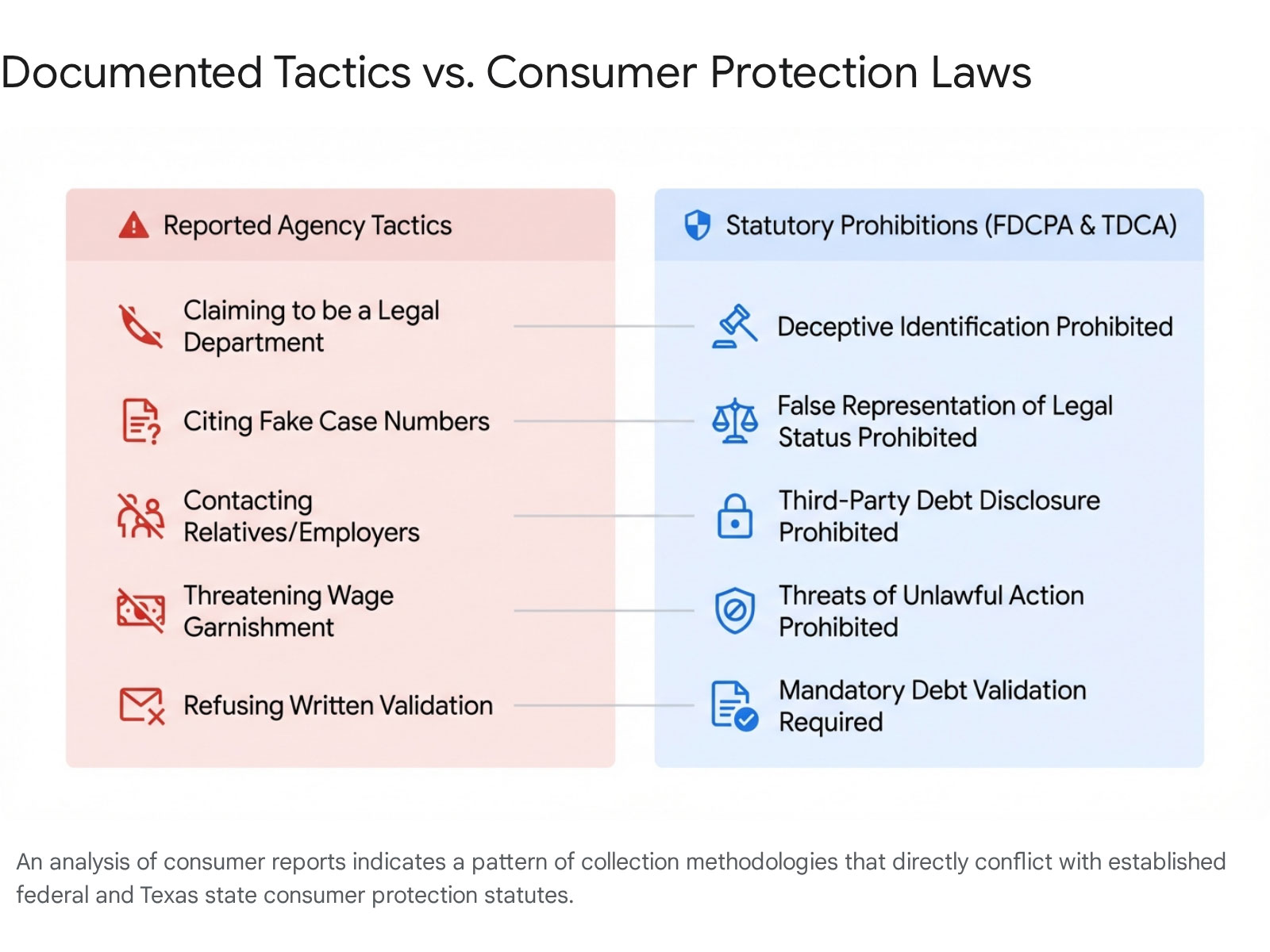
Consumers report receiving aggressive voicemails from individuals claiming to be calling from the “legal department of Stafford Group and Associates,” or characterizing the firm as a “legal company that handles files before going to court”. Furthermore, collectors frequently cite fabricated case numbers (such as “236588”) and falsely claim that a formal complaint or legal summons has already been filed against the consumer. These tactics are engineered to manufacture a sense of immediate legal peril, coercing the consumer into a hasty financial settlement out of fear.
Unauthorized Third-Party Disclosures
Debt collectors operate under strict communication limitations. While they may contact third parties (such as relatives or employers) solely to acquire location information about a debtor, they are absolutely forbidden from disclosing that the consumer owes a debt.
Reports indicate that Stafford Group and Associates routinely violates this standard. Consumers have documented instances where the agency contacted ex-spouses, current employers, extended family members, and neighbors, explicitly disclosing the alleged financial obligation. These unauthorized disclosures are utilized as a weapon to inflict severe reputational damage and social pressure on the consumer.
Collection of Phantom and Expired Debts
A significant portion of the grievances lodged against the agency involves attempts to collect on “phantom debts.” These are obligations that have either been previously settled, belong to victims of identity theft, or have vastly exceeded the statute of limitations for legal action.
Specific narratives highlight these unlawful attempts:
-
Zoca Loans Claims: Consumers have reported aggressive calls demanding payment for online payday loans allegedly originated by Zoca Loans in 2019. In these instances, the agency often refuses to provide the original signed contract, claiming it can only be produced during litigation.
-
FlexShopper Accounts: The agency has been accused of executing unauthorized “hard pulls” on consumer credit reports to collect on decade-old, previously settled debts originating from FlexShopper, resulting in immediate and unjustified damage to consumer credit scores.
Unlawful Threats of Wage Garnishment and Property Liens
To further induce panic, collectors from the agency have reportedly threatened severe financial actions that they possess no legal authority to execute. Consumers report being threatened with immediate property liens (e.g., “put a lien on your corvette”) or devastating wage garnishment if a payment plan is not established immediately.
In Texas, consumer protections regarding wage garnishment are exceptionally strong. A third-party debt collection agency cannot garnish your wages for standard consumer debts, such as credit cards or payday loans. Garnishment in Texas is constitutionally limited to very specific obligations, such as child support, unpaid taxes, and federal student loans. Furthermore, an agency cannot place a lien on your property without first successfully suing you in a court of law and obtaining a formal judgment.
Call for Witnesses: Building a Cause of Action
A central objective of this investigative report is to identify Texas consumers who have had direct interactions with the Person of Interest, Francisco Arellano, or any representatives operating on behalf of Stafford Group and Associates.
When consumers come forward to share their documented experiences, it establishes a verifiable pattern of behavior. Witness testimonies are the foundational evidence required to prove systematic violations of the Fair Debt Collection Practices Act and the Texas Debt Collection Act. Details regarding the specific names used by collectors during phone calls, the exact phrasing of threats, and instances of unauthorized third-party disclosures are critical.
If you have received aggressive communications via staffordga.com, letters from P.O. Box 433 Orange, CA 92856, or harassing phone calls from 800-230-0446, your experience matters. Retaining your voicemails, text messages, physical collection letters, and records of credit report inquiries is essential. If a pattern of unlawful harassment is definitively established, affected consumers could possess a highly viable cause of action against Stafford Group and Associates. This empowers consumers to seek statutory damages, actual damages, and the mandatory coverage of their attorney’s fees by the collection agency.
Understanding Your Rights Under Texas and Federal Law
Consumers residing in Texas are fortified by a powerful, dual-layered legal shield designed to prevent collection abuse: the federal FDCPA and the Texas Debt Collection Act (TDCA), codified under Texas Finance Code Chapter 392.
The TDCA is particularly robust because, unlike the federal FDCPA which generally restricts only third-party collection agencies, the Texas statute also extends critical protections to original creditors attempting to collect their own debts.
The following table outlines the overlapping protections afforded to Texas consumers under both state and federal law:
| Prohibited Collection Action | Federal Standard (FDCPA) | Texas Standard (TDCA) | Legal Consequence for Violation |
| Unauthorized Third-Party Disclosure | Prohibited (Except for strict location gathering) | Prohibited | Statutory Damages, Actual Financial Damages |
| False Threats of Lawsuits/Arrest | Strictly Prohibited | Strictly Prohibited | Civil Liability, Mandatory Attorney Fees |
| Harassing Call Volume & Timing | Prohibited (Continuous/Outside 8am-9pm) | Prohibited | Cease & Desist Enforcement, Damages |
| Deceptive Identification (Fake Lawyers) | Prohibited | Prohibited | Potential Injunction, Civil Penalties |
Furthermore, under federal law, consumers possess the unilateral right to completely halt telephonic communication from a collection agency. By issuing a formal, written “Cease and Desist” directive via certified mail, the agency is legally barred from contacting you further, except to formally notify you of a specific legal action. Any continued contact after the receipt of this letter constitutes a willful violation of federal law, exponentially strengthening your legal defense.
Why Texas Consumers Benefit from Hiring Cannon Legal PLLC
When facing relentless, legally ambiguous collection efforts from out-of-state entities, attempting to navigate the complex regulatory environment independently can be dangerous. A single misstep—such as accidentally acknowledging an expired debt on a recorded line—can restart the statute of limitations, exposing you to renewed legal jeopardy. Securing expert legal representation is the most effective way to protect your assets and your peace of mind.
Cannon Legal PLLC is a premier, nationwide law firm dedicated to consumer protection, debt defense, and credit reporting litigation. The firm has established a formidable track record of defending clients against powerful creditors and debt buyers.
Led by Managing Attorney John Helstowski (State Bar of Texas # 24078653, licensed since November 2011), the firm specializes in leveling the playing field for consumers. With strategically located principal offices in Colleyville and Dallas Cannon Legal PLLC provides highly accessible, localized representation for Texas residents while maintaining a robust nationwide advocacy network.
The Cannon Legal Strategic Advantage
Hiring Cannon Legal PLLC to assist with your debt collection issue provides several distinct, highly effective advantages:
-
Aggressive Burden of Proof Enforcement: Debt buyers frequently operate using incomplete, purchased spreadsheets, lacking the original signed documentation required to prove you owe the debt. Cannon Legal PLLC actively challenges the chain of title, demanding full verification. If the agency cannot legally validate the debt, the firm moves for immediate dismissal of the claims.
-
Strategic Use of Arbitration: Many consumer contracts contain hidden arbitration clauses. Cannon Legal PLLC utilizes these clauses offensively, forcing debt buyers out of traditional courtrooms and into private arbitration. This brilliant tactic shifts the heavy financial burden of arbitration costs directly onto the collection agency, often making the continued pursuit of your debt financially ruinous for the collector.
-
Offensive FDCPA Litigation: The firm does not merely defend you; they go on the offensive. By meticulously documenting the harassment, deceptive threats, and FDCPA violations committed by collectors, Cannon Legal PLLC files aggressive counterclaims. This not only forces the harassment to stop but frequently results in the collection agency paying you statutory damages and covering all your legal fees.
-
Comprehensive Credit Restoration: The damage inflicted by aggressive collections severely impacts your credit report. Cannon Legal PLLC specializes in addressing unauthorized credit pulls and inaccurate reporting under the Fair Credit Reporting Act (FCRA), ensuring that illegal or obsolete collection accounts are permanently deleted from Experian, TransUnion, and Equifax.
Whether you are dealing with predatory lending, merchant cash advance (MCA) disputes, medical billing errors, apartment collections, or the fallout of identity theft, Cannon Legal PLLC combines deep legal expertise with a client-centered approach to deliver customized financial solutions.
Conclusion: Take Action Against Debt Collection Abuse
The aggressive recovery tactics employed by third-party debt buyers are specifically engineered to capitalize on consumer fear, stress, and a general lack of legal awareness. From misrepresenting themselves as judicial authorities to threatening unlawful wage garnishments and harassing employers, these collection methodologies rely entirely on intimidation rather than legal due process.
However, Texas consumers hold immense power. The Texas Debt Collection Act and the federal Fair Debt Collection Practices Act provide robust, actionable shields against financial abuse. Establishing a documented pattern of these violations is vital. Witnesses who have endured aggressive tactics from the P.O. Box 433 Orange, CA 92856 entity, staffordga.com, or the 800-230-0446 phone line are strongly encouraged to come forward to help build a cause of action.
If you are currently facing relentless calls, unauthorized credit inquiries, or an active debt lawsuit, do not attempt to navigate the legal system alone. Securing expert legal representation is your most effective defense. Cannon Legal PLLC possesses the specialized expertise, strategic foresight, and aggressive litigation posture required to dismantle unsubstantiated debt claims.
Do not let debt collectors dictate your financial future. Document all communications, refuse to validate phantom debts over the phone, and seek professional legal counsel immediately. Contact Cannon Legal PLLC today at (800) 890-8585 or via email at cs@cannonlegalplic.com to evaluate your legal defenses, definitively stop the harassment, and confidently restore your financial peace of mind.
Frequently Asked Questions (FAQs)
Is Stafford Group and Associates a legitimate company or a scam?
Stafford Group and Associates is a registered third-party debt collection agency operating primarily out of California. While they are a legal business entity, they maintain a poor reputation and lack BBB accreditation due to numerous documented consumer complaints detailing deceptive, aggressive, and potentially unlawful debt collection practices.
Can Stafford Group and Associates garnish my wages in Texas?
In Texas, third-party debt collectors generally cannot garnish your wages for standard consumer debts like credit cards or payday loans. Wage garnishment is strictly limited by the state constitution to specific obligations such as child support, unpaid taxes, alimony, and federal student loans.
How can a consumer legally stop harassing phone calls from debt collectors?
Consumers can legally halt telephonic harassment by sending a formal “Cease and Desist” letter to the agency via certified mail. Under the FDCPA, once the agency receives this written directive, they are prohibited from calling you again, except to formally notify you of specific legal action.
What happens if a debt collector sues me and I ignore the lawsuit?
Ignoring a formal lawsuit inevitably leads to a default judgment against you. A default judgment grants the debt collector the legal authority to pursue highly aggressive recovery methods, which may include freezing your bank accounts or placing liens on non-exempt property. Securing immediate legal representation is critical.
Why should a Texas consumer hire Cannon Legal PLLC for a debt lawsuit?
Cannon Legal PLLC specializes in consumer debt defense. Their attorneys meticulously challenge the collector’s evidence, leverage arbitration clauses to shift financial burdens away from the consumer, and actively sue agencies for FDCPA violations, often resulting in dismissed debts, restored credit, and financial compensation.